


COPD (chronic obstructive pulmonary disease) is a progressive respiratory condition that affects around 400,000 people in Switzerland and causes more than 3 million deaths worldwide each year.1 Smoking and air pollution are among the main risk factors.2.


Overview of chronic obstructive pulmonary disease






What is COPD?
Chronic obstructive pulmonary disease (COPD) is a common chronic respiratory condition that causes reduced airflow and breathing difficulties.2,6 COPD is characterised by chronic bronchitis and/or pulmonary emphysema.1,6 Various processes can cause the airways to narrow: damage to certain parts of the lungs, mucus blocking the airways and/or inflammation and swelling of the airway lining.2
COPD develops slowly over time, with smoking and air pollution being the most common causes.2 One in two smokers over the age of 40 suffers from chronic bronchitis.1 People with COPD are at increased risk of developing other health problems.2
COPD is the third leading cause of death worldwide and accounts for more than 3 million deaths each year.2
Possible consequences of COPD include:1
- Heart failure
- Various other heart conditions
- Pulmonary failure
- Isolation and depression resulting from severely reduced functional capacity
COPD is characterised by the occurrence of exacerbations, i.e. sudden worsening of COPD symptoms that require additional treatment and contribute to the progression of the disease.7 Exacerbations are associated with an accelerated loss of lung function and a lasting impairment of quality of life.8
Furthermore, a moderate exacerbation has been associated with a significant increase in the risk of severe cardiovascular events within the first 30 days.9 Severe exacerbations have even been linked to an increased risk of secondary cardiovascular events for up to one year.9 Furthermore, cardiopulmonary causes are the leading cause of death in patients
with COPD.10
GOLD classification of COPD
The GOLD classification of COPD describes the severity of airway obstruction and disease activity. It is used internationally and is also recommended by the SGP.6,11
The GOLD-ABE classification categorises patients according to their symptom burden and risk of exacerbation. Symptoms are assessed using standardised scores (mMRC or CAT), and the risk of exacerbation is determined on the basis of medical history. This enables targeted and individualised treatment planning.15, 16
Symptoms of COPD
In Switzerland, COPD generally presents as exertional dyspnoea, a chronic cough and sputum production, as well as exacerbations that significantly impair the daily lives and quality of life of those affected.1,3,11


Diagnosis of COPD and screening criteria


At-risk groups
According to the GOLD guidelines, a COPD screening assessment should be carried out from around the age of 35 in people with significant exposure (e.g. tobacco smoke, indoor/outdoor air pollution, occupational exposure) and/or respiratory symptoms.6 In particular, spirometry to screen for COPD should be carried out in people over the age of 40 with a smoking history of at least 10 pack-years and who have at least one key symptom (phlegm, cough or shortness of breath).11
Confirmation of the diagnosis by spirometry
Spirometry is the gold standard for confirming a diagnosis of COPD. The key diagnostic criterion is a FEV₁/FVC ratio < 0.7 following bronchodilation, which indicates airway obstruction that is not fully reversible. Spirometry is an objective and easily reproducible method; it should be performed in all patients in whom COPD is suspected.6,11
In addition to confirming the diagnosis, spirometry enables the degree of airway obstruction to be classified according to the four GOLD stages (GOLD 1 to 4).6
GOLD stage |
FEV₁ (% of the assigned) |
degree of obstruction |
GOLD 1 |
≥ 80 % |
mild |
GOLD 2 |
50-79 % |
moderate |
OR 3 |
30-49 % |
severe |
OR 4 |
< 30 % |
very severe |
Adapted from GOLD 2026, Fig. 2.106
This spirometric classification is used primarily to assess prognosis and only partially reflects the clinical burden of the disease.6
Imaging techniques (such as CT scans or X-rays) are used for differential diagnosis and to rule out other possible causes, but do not replace spirometry.6
Initial clinical assessment of COPD
To assess the severity of COPD and determine the optimal treatment, a comprehensive approach is required that takes into account several clinical dimensions. In this regard, functional limitations, clinical symptoms, disease activity and relevant associated factors must be considered together.6,11
The following aspects should be taken into account in the initial assessment:6
- Functional severity of airway obstruction: assessed by spirometry (FEV₁/FVC > 0.7 after bronchodilation)
- Clinical symptom burden: assessed in a standardised manner, for example using the COPD Assessment Test (CAT) or the mMRC dyspnoea score15,16
- History of moderate and severe exacerbations as markers of disease activity
- Smoking as a key risk factor and a lever for preventive measures
- Blood eosinophil count (EOS) as a supporting biomarker for treatment decisions
- Screening for α₁-antitrypsin deficiency, a potential genetic cause of COPD
- Associated conditions, particularly cardiovascular, metabolic and mental health comorbidities
The combination of symptom burden and history of exacerbations enables the GOLD group to be determined, which facilitates the practical classification of patients into treatment groups. The GOLD-ABE classification, based on symptoms and exacerbations, now forms the basis for treatment decisions.6
GOLD |
Symptom burden |
Risk of exacerbation |
A |
Low: mMRC 0–1 or CAT < 10 |
0 moderate or severe exacerbations in the past year |
B |
High: mMRC ≥ 2 or CAT ≥ 10 |
0 moderate or severe exacerbations in the p past year |
E |
Regardless of symptom burden |
≥ 1 moderate or severe exacerbation in the past yearxml-ph-0000@deepl.internal |
Adapted from GOLD 2026, Fig. 2.136
Regardless of the initial classification, it is recommended that a structured and regular reassessment of symptoms, exacerbations and response to treatment be carried out throughout the course of the disease, as the clinical situation and therapeutic needs may change over time.6,11
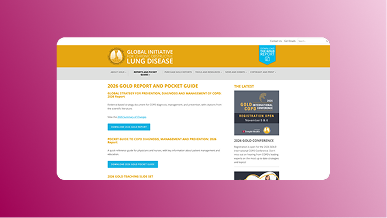
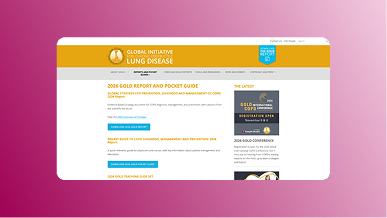
GOLD 2026 Pocket Guide
The GOLD Pocket Guide is a concise summary of the current GOLD guidelines and facilitates the management of patients with COPD in accordance with the guidelines in everyday practice, both in general practice and in hospital settings.12
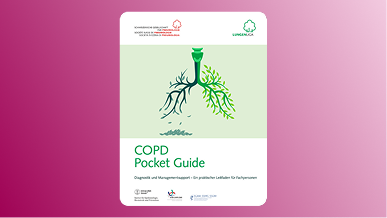
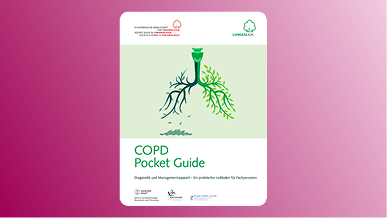
COPD Pocket Guide
The Swiss Lung Association’s COPD Pocket Guide provides a practical summary of the Swiss guidelines on the diagnosis, classification and treatment of COPD, taking into account the national healthcare system and in accordance with Swiss guidelines.11
Treatment of COPD and therapeutic options in Switzerland
Modern treatment of COPD is based on the GOLD guidelines and is supplemented by the Swiss Lung Association’s pocket guide to COPD. It is based on the use of inhaled bronchodilators as first-line treatment, with individualised adjustment of the inhalation regimen for COPD, targeted escalation up to triple inhaled therapy, as well as complementary measures such as oxygen therapy for COPD and the early integration of pulmonary rehabilitation – depending on the severity, symptom burden and risk of exacerbation.6,11


Pharmacological treatment of COPD:
Pharmacological treatment of COPD relies primarily on the inhalation of bronchodilators. Short-acting β₂-agonists (SABAs) and short-acting muscarinic antagonists (SAMAs) are used as and when required to provide rapid symptom relief. For maintenance treatment, long-acting β₂-agonists (LABAs) and long-acting muscarinic antagonists (LAMAs) form the basis of treatment.6,11
Treatment according to GOLD-ABE guidelines:
Pharmacological treatment of COPD relies primarily on inhaled bronchodilator therapy. Short-acting β₂-agonists (SABAs) and short-acting muscarinic antagonists (SAMAs) are used as ‘as-needed’ medications for rapid symptom relief. For maintenance treatment, long-acting β₂-agonists (LABAs) and long-acting muscarinic antagonists (LAMAs) form the basis of drug therapy.6,11
GOLD Group |
Initial |
Escalation |
A |
LABA or LAMA |
|
b |
LABA + LAMA |
|
e |
LABA + LAMA |
for Eos ≥ 100: LABA + LAMA + CSI*,# |
New in GOLD 2026:
Already ≥ 1 moderate exacerbation → group E6
* Fixed-dose triple therapy (LABA + LAMA + ICS) is not authorised in Switzerland for initial treatment.13 AstraZeneca cannot and is not permitted to recommend the use of its products outside theofficial indication (www.swissmedicinfo-pro.ch).
Inhaled corticosteroids (ICS) are not routinely indicated, but should be used selectively in patients with frequent exacerbations and eosinophilia.11
Escalation of treatment in the event of persistent exacerbations:
- Roflumilast may be considered in cases of persistent exacerbations despite optimised inhaled therapy in patients with severe airway obstruction and chronic bronchitis.6
- Azithromycin may be used, particularly in former smokers, to reduce the rate of exacerbations.6
- If exacerbations persist despite optimised inhaled treatment (including triple therapy in accordance with the GOLD treatment escalation guidelines), broader treatment options such as biologics (e.g. dupilumab or mepolizumab) may be considered.6,11
Inhaled treatment / inhalation systems
Inhalation is the preferred route of administration in COPD, as it allows for targeted action in the airways whilst limiting systemic exposure. Therapeutic success depends not only on the active ingredient, but also, and above all, on the inhalation device and its correct use.6
Available inhalation systems:6
System |
Prerequisites6 |
Limitations6 |
Dry powder inhalers (DPI) |
Sufficient inspiratory flow |
Less suitable for patients with low respiratory capacity |
Metered-dose inhalers (pMDI) |
Good hand-breathing coordination, sufficient inspiratory flow |
Coordination errors; use of an inhalation chamber may be necessary |
Soft mist inhalers (SMI) |
Slow, deep inhalation; inspiratory force required ly lower than that for DPI/pMDI |
Slightly more complex to use |
Nebuliser |
Requires virtually no active participation from the patient; suitable when DPI/pMDI/SMI cannot be used |
Time-consuming and offers reduced mobility |
The choice must be made on a case-by-case basis, taking into account factors such as inspiratory flow rate, coordination, cognitive abilities and patient preferences. Structured training in inhalation technique, as well as regular monitoring of this technique, form an integral part of therapeutic follow-up.6
Oxygen therapy
Long-term oxygen therapy is indicated, in cases of stable COPD, exclusively in patients with severe chronic hypoxaemia. The primary aim is not to relieve symptoms, but to improve the prognosis. In patients without significant resting hypoxaemia, oxygen therapy is not routinely recommended. The indication must be established on the basis of objective measurements and reassessed regularly.6
Pulmonary rehabilitation
Pulmonary rehabilitation is a central component of non-pharmacological treatment for COPD and is recommended for patients, regardless of the severity of their disease, who have a significant symptom burden or an increased risk of exacerbation. It comprises physical training, respiratory therapy, patient education and psychosocial support. Evidence shows that rehabilitation improves exercise capacity, alleviates dyspnoea and enhances quality of life, whilst reducing the risk of subsequent events and hospitalisations, particularly following exacerbations. It is recommended that rehabilitation be incorporated from the outset of the treatment plan and assessed regularly, as its effects are independent of the severity determined by spirometry.6
Non-pharmacological treatment and prevention of COPD
Motivation to stop smoking: giving up smoking is the most effective individual measure for slowing the progression of COPD.6,11
Vaccinations: to reduce COPD exacerbations, hospitalisations and
mortality, the SGP recommends regular vaccinations, in particular: 11
- Influenza: annually
- SARS-CoV-2: in accordance with the FOPH’s recommendations for at-risk patients
- Pneumococcal: PCV15 or PCV20 (tailored to age and risk profile)
- RSV/herpes zoster: vaccination against RSV and herpes zoster in high-risk elderly patients as well as in certain selected patients.
Furthermore, support with self-management (including monitoring of symptoms, management of medication and decision-making) can improve resilience, quality of life and prognosis. A personalised action plan for managing exacerbations can boost patients’ self-efficacy and enable early detection and treatment of worsening symptoms.11
Recognising and treating COPD exacerbations
The management of exacerbations follows a clear protocol, based on the GOLD and SGP guidelines. The aim is to detect acute deterioration early, stabilise the airways rapidly, avoid complications and prevent further exacerbations. A structured assessment helps to determine whether outpatient treatment or hospital management is appropriate.6,11


Initial |
criteria6 |
Mild exacerbation |
Mild acute worsening accompanied by:
|
Moderate exacerbation |
If at least three of the following criteria are met:
|
Severe exacerbation |
Signs of respiratory failure or systemic involvement, such as
|
Acute management of COPD exacerbation
Treatment of an exacerbation of COPD is carried out in stages and must be initiated early:6,11
- Bronchodilation by increasing the dose of short-acting β₂-agonists (SABA) ± anticholinergics (SAMA)
- Systemic corticosteroids
- Antibiotics in cases of purulent sputum, signs of bacterial infection or severe exacerbation
- In the event of respiratory acidosis or hypercapnia, non-invasive ventilation (NIV) should be considered as soon as possible, as it has been shown to reduce the rate of intubation, the length of hospital stay and mortality.
- In some cases, high-flow nasal therapy (HFNT) may also be used.
COPD: when is hospitalisation indicated?
In cases of mild to moderate COPD exacerbation, outpatient treatment with a follow-up appointment within 48 hours is possible. In cases of severe exacerbation, frequent check-ups are required after 24 to 48 hours.6,11
Hospitalisation is indicated in the following cases:6,11
- no clinical improvement
- persistent hypoxaemia
- signs of respiratory failure or significant comorbidities
Follow-up and prevention
Following an exacerbation, a structured reassessment is essential.6,11
This includes:
- optimising and, where necessary, stepping up maintenance inhaled treatment (e.g. dual or triple therapy)
- Checking inhalation technique and adherence to treatment
- the early initiation of pulmonary rehabilitation
- Management of comorbidities and risk factors.
Link to the COPD information sheet


Recommendations and resources
FAQ
The typical symptoms of COPD are exertional dyspnoea, chronic cough and sputum production (AHA symptoms). Initially, shortness of breath usually only occurs during physical exertion and, as the disease progresses, may persist even at rest. Many patients also report a decline in physical capacity, rapid fatigue and reduced stamina in daily life.
COPD is also characterised by exacerbations, i.e. acute worsening of symptoms, often triggered by infections or environmental factors and requiring an adjustment to treatment.1,3
The diagnosis of COPD is based on a combination of clinical symptoms, risk factors (particularly smoking) and objective measures of lung function.
Spirometry is the gold standard for confirming the diagnosis. A FEV₁/FVC ratio < 0.7 following bronchodilation confirms persistent airway obstruction.11
Patients in Group B of the GOLD classification have a high symptom burden but are not at increased risk of exacerbation. According to the recommendations of GOLD and the SGP, dual bronchodilation combining a LABA and a LAMA is recommended. This combination improves dyspnoea, exercise tolerance and quality of life more effectively than monotherapy.6,11
Triple therapy for COPD (LABA + LAMA + ICS) is recommended in patients at high risk of exacerbation, particularly in cases of:
≥ 1 moderate or severe exacerbation per year despite dual bronchodilation
a high blood eosinophil count (e.g. ≥ 300/µl or ≥ 100/µl in cases of frequent exacerbations)6,11,##
## The fixed-dose triple therapy (LABA + LAMA + ICS) is not authorised in Switzerland for initial treatment or as an escalation therapy in cases of single bronchodilator therapy or single inhaled corticosteroid therapy.14 AstraZeneca cannot and is not authorised to recommend the use of its products outside the official indication (www.swissmedicinfo.ch).
Oxygen therapy for COPD is indicated, in cases of stable COPD, only in the presence of severe chronic hypoxaemia (e.g. PaO₂ ≤ 55 mmHg or SpO₂ ≤ 88%). The aim is to improve the prognosis, rather than primarily to relieve symptoms. In patients without significant hypoxaemia at rest, oxygen therapy is not routinely recommended.6
Pulmonary rehabilitation is a central component of non-pharmacological treatment for COPD. It improves exercise capacity, alleviates dyspnoea and enhances quality of life, whilst reducing the number of hospital admissions, particularly following exacerbations. Pulmonary rehabilitation is suitable for most people with COPD; improvements in exercise capacity and health-related quality of life have been demonstrated across all severity levels of COPD, with particularly strong evidence in patients with moderate to severe disease.
Rehabilitation should be incorporated into the treatment plan as soon as possible, regardless of the severity determined by spirometry.6
#TRIXEO AEROSPHERE is indicated for maintenance treatment in adult patients with chronic obstructive pulmonary disease (COPD) who are not adequately controlled by a combination of an inhaled corticosteroid and a long-acting beta-2-agonist, or by a combination of a long-acting beta-2-agonist and a long-acting muscarinic receptor antagonist (for effects on symptom control and the prevention of exacerbations, see the ‘Clinical Efficacy’ section).13 AstraZeneca cannot and is not authorised to recommend the use of its products outside the official indication (www.swissmedicinfo-pro.ch).
AECOPD: acute exacerbation of COPD; FOPH: Federal Office of Public Health; CAT: COPD assessment test; COPD: chronic obstructive pulmonary disease; CRP: C-reactive protein; CT scan: computed tomography; DP: dry powder inhaler; EOS: blood eosinophils (cells/µl); FEV₁: forced expiratory volume in one second; FVC: forced vital capacity; GOLD: Global Initiative for Chronic Obstructive Pulmonary Disease; HFOT: high-flow oxygen therapy; ICS: inhaled corticosteroid; LABA: long-acting beta-2 agonist; LAMA:long-acting muscarinic antagonist; LTOT: long-term oxygen therapy; mMRC: modified Medical Research Council dyspnoea scale; NIV: non-invasive ventilation; PaCO₂: arterial partial pressure of carbon dioxide; PaO₂: arterial partial pressure of oxygen; PCV: pneumococcal conjugate vaccine; MDI: metered-dose inhaler; RSV: respiratory syncytial virus; SABA: short-acting beta-2 agonist; SAMA: short-acting muscarinic antagonist; SARS-CoV-2: severe acute respiratory syndrome coronavirus 2; SGP: Swiss Society of Pneumology; SMI: soft mist inhaler; SpO₂: peripheral oxygen saturation; EVA: visual analogue scale.
References:
- FOPH, Chronic liver disease. Updated: 20 November 2020. Available online at: https://www.bag.admin.ch/fr/affections-respiratoires-chroniques. Last accessed: January 2026.
- WHO, Fact sheet on COPD. Updated: 6 November 2024. Available online at: https://www.who.int/news-room/fact-sheets/detail/chronic-obstructive-pulmonary-disease-(copd). Last accessed: 01/2026.
- Vogelmeier CF, et al. Goals of COPD treatment: Focus on symptoms and exacerbations. Respir Med. 2020;166:105938.
- Hurst JR, et al. Susceptibility to exacerbation in chronic obstructive pulmonary disease. N Engl J Med. 2010;363(12):1128–38.
- Ho T-W, et al. In-hospital and one-year mortality and their predictors in patients hospitalised for first-ever chronic obstructive pulmonary disease exacerbations: A nationwide population-based study. PLoS One. 2014;9:e114866.
- Global Initiative for Chronic Obstructive Lung Disease (GOLD). Global strategy for the diagnosis, management, and prevention of COPD (2026 report). GOLD website: https://goldcopd.org/2026-gold-report/ Last accessed: 01/2026
- Barnes N, et al. Chronic obstructive pulmonary disease and exacerbations: patient insights from the global Hidden Depths of COPD survey. BMC Pulm Med. 2013;13:54.
- Stolz D, et al. Towards the elimination of chronic obstructive pulmonary disease: a Lancet Commission. Lancet. 2022;400(10356):921–72.
- Vogelmeier C, et al. Increased risk of severe cardiovascular events following exacerbations of COPD: a multi-database cohort study. Eur Respir J 2023;62:PA3013 (Abstract).
- Mannino DM, et al. Global Initiative on Obstructive Lung Disease (GOLD) classification of lung disease and mortality: findings from the Atherosclerosis Risk in Communities (ARIC) study. Respir Med. 2006;100:115–22.
- Swiss Society of Pneumology (SGP); Swiss Lung League. COPD Pocket Guide – Diagnosis and Management Support: A Practical Guide for Healthcare Professionals. 2025/3rd edition. Available online at: https://www.lungenliga.ch/de/copd-pocket-guide. Last accessed: 01/2026.
- Global Initiative for Chronic Obstructive Lung Disease (GOLD). GOLD Pocket Guide to COPD Diagnosis, Management, and Prevention. 2026 Edition. Available online at: https://goldcopd.org/wp-content/uploads/2026/01/GOLD-Pocket-Guide-2026-v1.1-20Nov2025_WMV2.pdf Last accessed: 01/2026.
- TRIXEO AEROSPHERE® Professional Information. Available at www.swissmedicinfo-pro.ch. Last accessed: 03/2026.
- Soler-Cataluña JJ, et al. Risk validation of a new quantitative score for clinical control of chronic obstructive pulmonary disease: The RADAR score. Arch Bronconeumol. 2026;62(1):28–34.
- https://www.inanutshell.ch/rechner/mmrc-dyspnoeskala/
- https://www.inanutshell.ch/rechner/copd-assessment-test/
Act on COPD


Useful product information


CH-12804 05/2026

This website is intended for healthcare professionals in Switzerland only.