



Hematology Banner
Hematology Banner

HEMATOLOGY

Overview CLL & MCL

Chronic Lymphocytic Leukaemia (CLL) and Mantle Cell Lymphoma (MCL) are blood cancers that begin in lymphocytes, a type of white blood cell. CLL is the most common adult leukaemia worldwide;4 MCL is a rare subtype of non-Hodgkin lymphoma.12,13


CLL is a slow-growing cancer of abnormal B-lymphocytes that start in the bone marrow and enter the bloodstream, crowding out healthy blood cells over time. While the mortality rate and survival in Switzerland have improved significantly in recent decades20, the number of people living with lymphocytic leukaemia has risen to 4,370.21


MCL is typically aggressive B cell lymphoma arising in the lymph node’s mantle zone; part of the non Hodgkin lymphoma group.12,13

CLL at a Glance
CLL at a Glance

CLL at a glance

Overview

  • Chronic Lymphocytic Leukaemia (CLL) is a type of blood cancer. It is caused by the rapid production of abnormal lymphocytes, a type of white blood cell. These cancerous cells first appear in the bone marrow and eventually circulate in the bloodstream.1
  • As the abnormal cells crowd the bone marrow, there is less room to produce healthy white blood cells, red blood cells and platelets.2 The accumulation of abnormal lymphocytes within the bone marrow andblood and lymph nodes typically happens slowly.1
  • Because the abnormal lymphocytes are slow growing cells, most people with CLL can live with it for many years with few or no symptoms appearing.2,3

Globe Icon
Globe Icon

CLL is the most common type of leukaemia found in adults worldwide, with over 117,000 new cases diagnosed globally in 2021.4 In Switzerland, around 1,200 people are diagnosed each year and the 5-year survival rate is 83.6%.19

71 Icon
71 Icon

The average age at time of diagnosis is approximately 71 years of age.5

Men Icon
Men Icon

Men are more likely to have CLL than women.5

Exclamation Icon
Exclamation Icon

The majority of CLL patients have multiple comorbid health conditions.6

Some people with CLL may not experience any symptoms at diagnosis, but as the disease progresses and disrupts the immune system, it produces abnormal antibodies that attack normal blood cells and can cause symptoms such as7
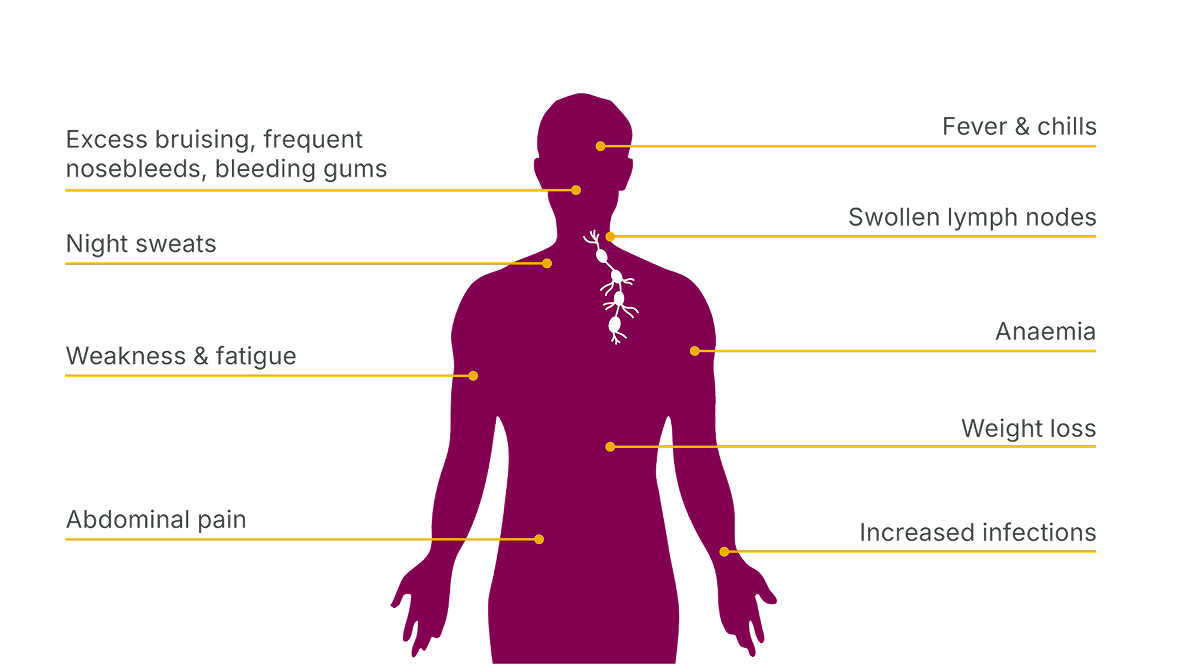
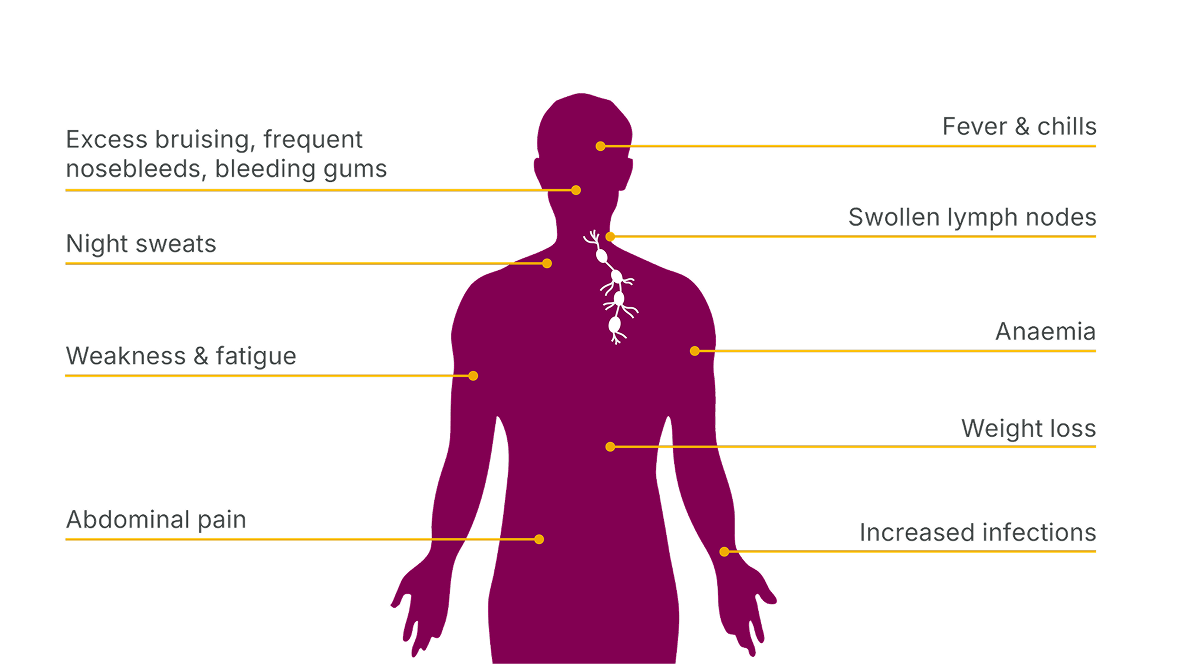
Common Symptoms of CLL Common Symptoms of CLL

*Symptoms of CLL are often nonspecific and can resemble those of other conditions7

Diagnosis Icon
Diagnosis Icon

Many patients do not have any symptoms upon diagnosis. CLL is often found in blood tests for unrelated health problems or during routine check-ups.8 Additional testing for a diagnosis may include flow cytometry, bone marrow tests, molecular tests, lymph node biopsy, imaging tests, CT or MRI scans and more.8

Treatment Options for CLL Icon

Treatment options for CLL can vary based on age and other factors such as symptoms, gene or chromosome changes within the leukaemia cells and overall health.9


Some commonly used treatment options include chemotherapy, immunotherapy, targeted therapy or stem cell transplant.2,9 

Key: CLL: Chronic Lymphocytic Leukaemia | MRI: Magnetic Resonance Imaging | CT: Computed Tomography Scan
MCL at a Glance
MCL at a Glance

MCL at a glance

Overview

Lymphoma is a blood cancer of the lymphatic system. It is caused by the rapid production of lymphocytes, a type of white blood cell.10 B cells and T cells are the two types of lymphocytes that can develop into lymphomas.11 The two main types of lymphoma are Hodgkin lymphoma and non- Hodgkin lymphoma (NHL).10


Mantle Cell Lymphoma (MCL) is a rare type of NHL typically resulting when B-lymphocytes mutate into malignant cells within a region of the lymph node known as the mantle zone.12


Pie Chart Icon
Pie Chart Icon

MCL comprises about 3-6% of NHL, with an annual incidence of 0.5 per 100,000 population in Western countries; in the US, it is estimated that approximately 4,000 new cases of MCL are diagnosed each year.14,15

Men Symbol Icon
Men Symbol Icon

Men are more likely to have MCL than women.12

Person Icon
Person Icon

The average age of diagnosis ranges from 60 to 70 years old.16

World Globe Icon
World Globe Icon

It is estimated that there are more than 21,000 patients diagnosed with MCL in the US, EU, Japan and China.17

MCL may not appear to have symptoms during the early stages of disease. As the disease progresses, a person may experience:12,15
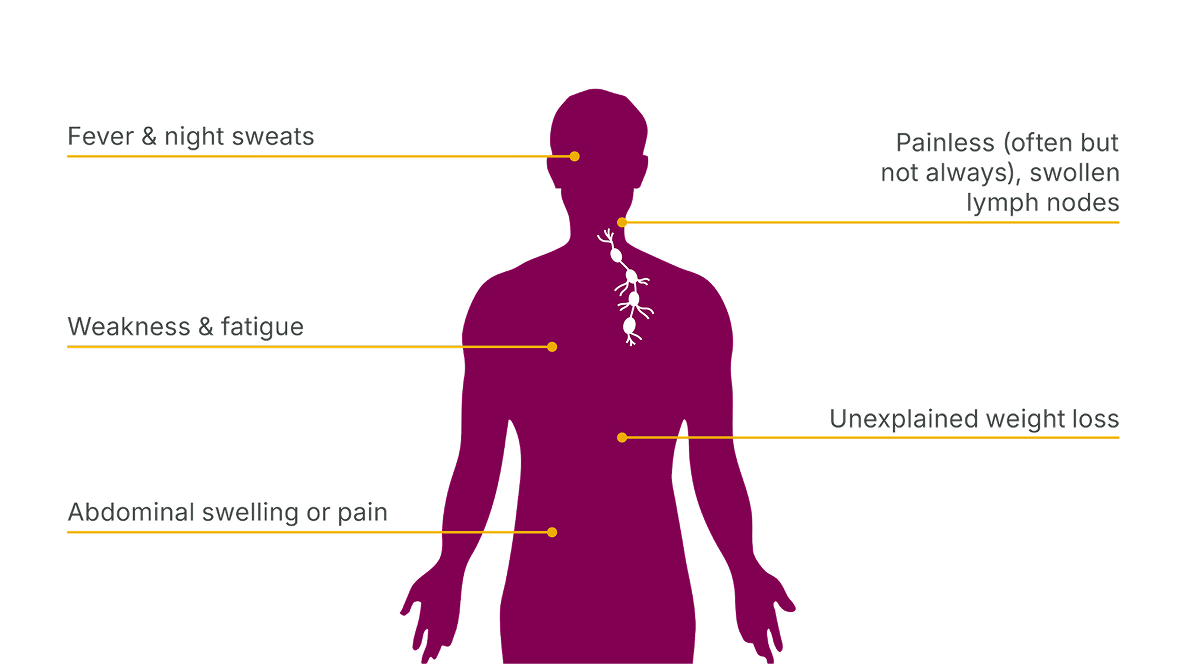
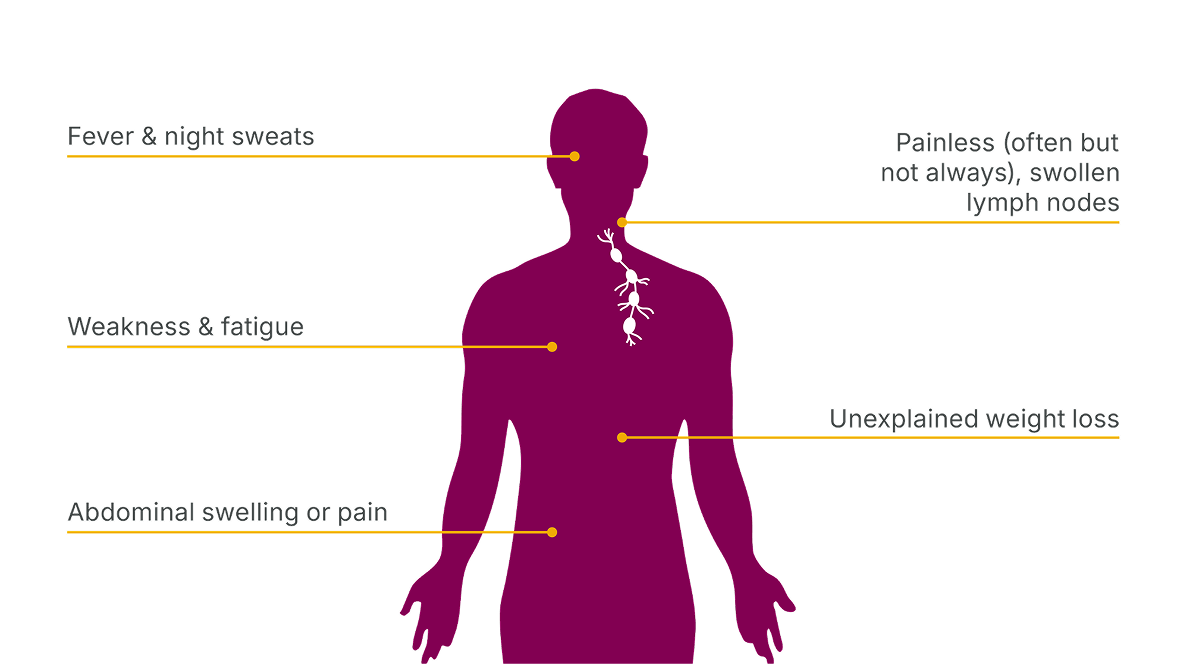
Common Symptoms of MCL Common Symptoms of MCL

*Symptoms are non-specific and could arise from other less serious conditions.12,15

Diagnosis Icon
Diagnosis Icon

Diagnostic methods include physical examination, blood tests, imaging tests (like CT or PET scans), and biopsy of lymph nodes.12

Genetics Icon
Genetics Icon

Immunophenotyping (a technology using antibodies to identify cells by the markers on their surface) and genetic tests may be conducted to identify specific biomarkers and chromosomal abnormalities, known as translocations, associated with MCL.16

Treatment Options for MCL Icon

Treatment options vary based on the stage, tumor size, subtype, aggressiveness of the disease and other factors but may include chemotherapy, immunotherapy, targeted therapy, and stem cell transplantation.12,16,18

Interested in meeting the AstraZeneca team?

Meet us at the following national and international congresses:

American Society of Hematology Logo

American Society of Hematology

EHA Logo
EHA Logo

EHA

DGHO Logo
DGHO Logo

DGHO

SOHC Logo
SOHC Logo

SOHC

ICML
ICML

ICML

Useful product information

We apply our broad expertise in the areas of research and development throughout the entire lifecycle of a medication. Discover our indications or browse through all our products.

  1. American Cancer Society. What is Chronic Lymphocytic Leukemia? Available online at: https://www.cancer.org/cancer/types/chronic-lymphocytic-leukemia/about/what-is-cll.html. Accessed October 2026.
  2. National Cancer Institute. Chronic Lymphocytic Leukemia Treatment (PDQ®)–Patient Version. Available online at: https://www.cancer.gov/types/ leukemia/patient/cll-treatment-pdq. Accessed October 2026.
  3. National Organization for Rare Disorders. Living as a Chronic Lymphocytic Leukemia Survivor. Available online at: https://www.cancer.org/cancer/types/ chronic-lymphocytic-leukemia/after-treatment/follow-up.html. Accessed October 2026.
  4. Global Burden of Disease Collaborative Network's "Global Burden of Disease Study 2021 (GBD 2021)" published by the Institute for Health Metrics and Evaluation (IHME) in Seattle, United States, in 2024. Available online at: https://www.healthdata.org/research-analysis/library/global-burden-disease- 2021-findings-gbd-2021-study. Accessed October 2026.
  5. Aplastic Anemia and MDS International Foundation. Chronic Lymphocytic Leukemia. Available online at https://www.aamds.org/diseases/related/ chronic-lymphocytic-leukemia-cll. Accessed October 2026.
  6. Strati P, et al. Disease Progression and Complications Are the Main Cause of Death in Patients with Chronic Lymphocytic Leukemia (CLL) Independent of Age and Comorbidities at Diagnosis. Blood. 2015;126(23):5265
  7. Krebsliga. Beschwerden und Symptome. Available online at: https://www.krebsliga.ch/ueber-krebs/krebsarten/leukaemien-blutkrebs/was-ist-eine-leukaemie/. Accessed October 2026.
  8. Krebsliga. Untersuchungen und Diagnose. Availiable online at: https://www.krebsliga.ch/ueber-krebs/krebsarten/leukaemien-blutkrebs/welche-untersuchungen-fuehren-zur-diagnose-leukaemie/. Accessed October 2026.
  9. Krebsliga. Behandlungsmöglichkeiten. Online available at: https://www.krebsliga.ch/ueber-krebs/krebsarten/leukaemien-blutkrebs/wie-wird-eine-leukaemie-behandelt/. Accessed October 2026.
  10. Lymphoma Research Foundation. What Is Lymphoma. Available at: https://lymphoma.org/aboutlymphoma/. Accessed October 2026.
  11. Lymphoma Research Foundation. Non-Hodgkin Lymphoma (NHL). Available at: https://lymphoma.org/aboutlymphoma/nhl/. Accessed October 2026.
  12. Lymphoma Research Foundation. Mantle Cell Lymphoma. Available at: https://lymphoma.org/aboutlymphoma/nhl/mcl/. Accessed October 2026.
  13. Cheah C, Seymour J, Wang ML. Mantle cell lymphoma. J Clin Oncol. 2016;34(11):1256-1269. doi: 10.1200/JCO.2015.63.5904. Accessed October 2026.
  14. MD Anderson Cancer Center. What to know about mantle cell lymphoma. Available at: https://www.mdanderson.org/cancerwise/what-to-know-about-mantle-cell-lymphoma-symptoms-diagnosis-and-treatment.h00-159385101.html. Accessed October 2026.
  15. Lynch DT, Koya S, Acharya U, et al. Mantle Cell Lymphoma. Available at: https://www.ncbi.nlm.nih.gov/books/NBK536985/. Accessed October 2026.
  16. AstraZeneca 2024. Q3 2024 Financial Results. Available at: https://www.astrazeneca.com/investor-relations.html. Accessed October 2026.
  17. Cleveland Clinic. "Mantle Cell Lymphoma: Symptoms, Diagnosis, and Treatment." Retrieved from Cleveland Clinic. Accessed October 2026.
  18. Cancer in Switzerland: key figures; Swiss Cancer League, last revised in December 2023. Available online at: https://www.krebsliga.ch/ueber-krebs/zahlen-fakten/-dl-/fileadmin/downloads/sheets/zahlen­krebs-in-der-schweiz.pdf. Last accessed on: 25.06.2026
  19. Andres M, et al. Trends of incidence, mortality and survival for chronic lymphocytic leukaemia / small lymphocytic lymphoma in Switzerland between 1997 and 2016: a population-based study. Swiss Med Wkly. 2021 Mar 15;151:w20463.
  20. Swiss Cancer Report 2021, Federal Office of Public Health, published on 14/10/2021, last updated on: 31/05/2022. Available online at: https://www.bfs.admin.ch/asset/de/19305696.
Last accessed on: October 2026.

CH-13013 07_2026